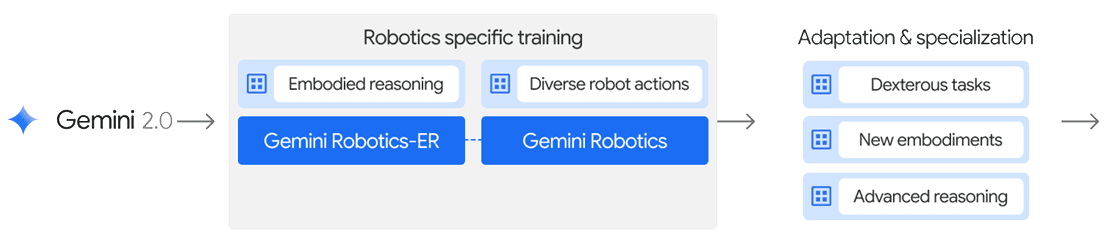
Gemini 2.0 Robotics Training
This project presents the Gemini 2.0 robotics training and specialization process, including diagrams and related visual content.
AI-Powered Robotics with Gemini 2.0
SPARCL leverages Google's Gemini 2.0 multimodal AI for advanced robotics training and specialization. Our embodied reasoning pipeline transforms general-purpose robots into specialized aviation maintenance agents capable of understanding and executing complex procedures.
Training Pipeline
- Robotics-specific fine-tuning from general Gemini 2.0 foundation model
- Embodied reasoning: robots understand spatial relationships and physical constraints
- Diverse robot action generation from natural language maintenance procedures
- Simulation-to-real transfer with domain randomization
- Continuous learning from field deployment feedback
Specialization Process
Starting from Gemini 2.0's multimodal understanding, we apply robotics-specific training that teaches the AI to interpret maintenance manuals, understand aircraft geometry, plan tool paths, and execute multi-step procedures. The system can parse FAA Advisory Circulars and translate them into executable robot programs.
Deployment
Trained models deploy to edge compute modules mounted on each robot platform, enabling real-time inference without cloud dependency. Updates are pushed OTA with validation gates to ensure safety-critical operations maintain their certified behavior.
Related Technologies
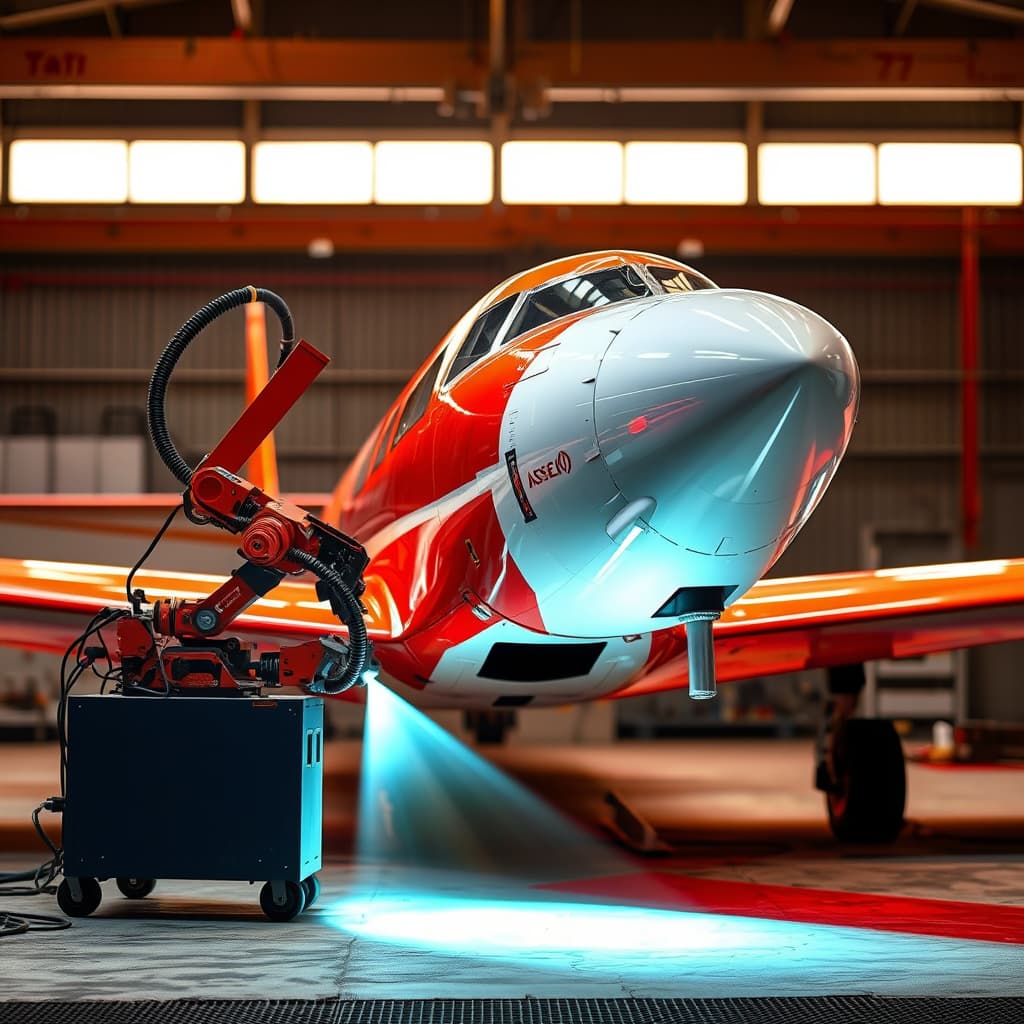
Robotic Inspection and Maintenance
This project focuses on the inspection and maintenance of aircraft using robotic systems, including robots inspecting aircraft in hangars.
Explore Technology →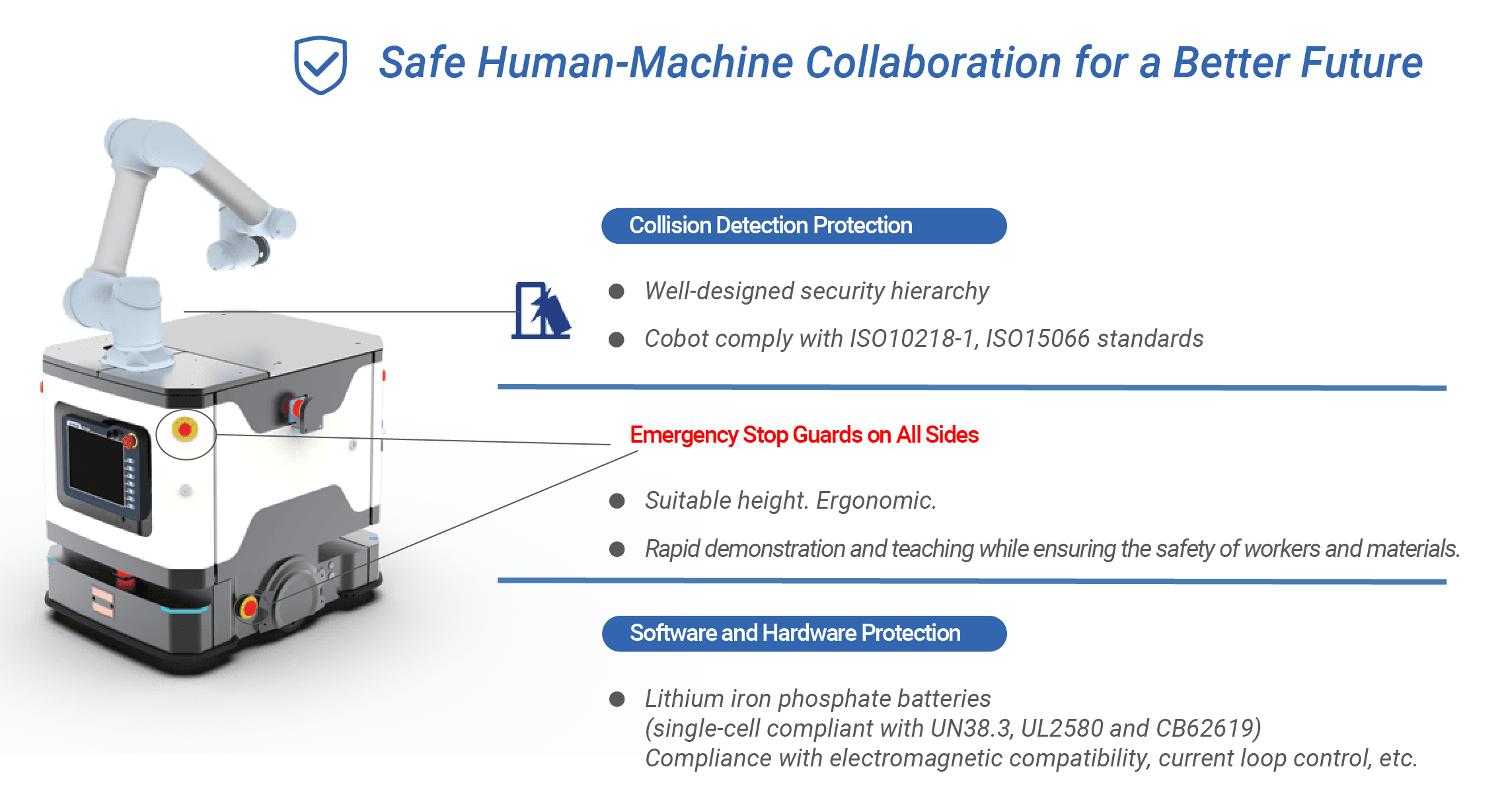
Robotics Safety and Collaboration
This project showcases various robotic systems designed for safety and collaboration with humans. It includes images of robots with safety features, touchscreen control panels, and safety zones with adjustable protection ranges.
Explore Technology →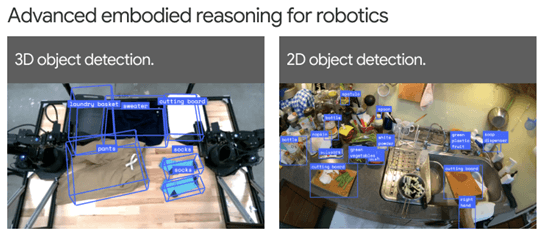
Robotics Vision and Detection
This project focuses on the use of vision and detection technologies in robotics, including 3D and 2D object detection, autonomous robots with vision, and multimodal prompts for robotics tasks.
Explore Technology →