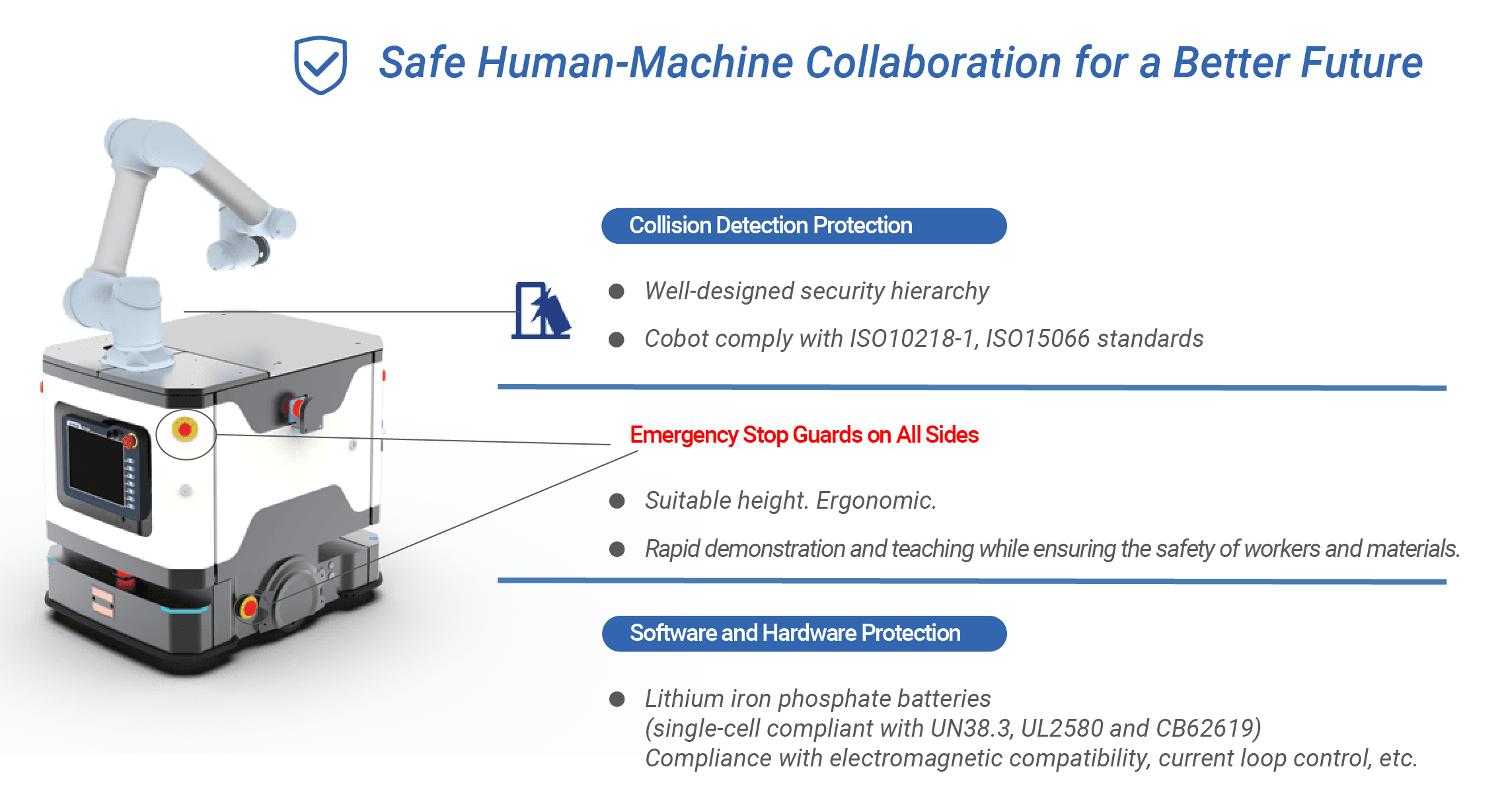
Robotics Safety and Collaboration
This project showcases various robotic systems designed for safety and collaboration with humans. It includes images of robots with safety features, touchscreen control panels, and safety zones with adjustable protection ranges.
Human-Robot Collaboration for Industrial Environments
SPARCL's collaborative robotics (cobot) systems are engineered for safe operation alongside human technicians in aviation maintenance environments. Every system meets or exceeds ISO 10218 and ISO/TS 15066 safety standards.
Safety Features
- Collision detection with force-limited joints (under 150N contact force)
- Configurable safety protection zones with real-time boundary enforcement
- Emergency stop integration with existing facility safety systems
- Speed and separation monitoring via 3D depth cameras
- Hand-guiding mode for intuitive manual positioning
Collaboration Modes
Our systems support multiple interaction paradigms: full autonomy for repetitive tasks, shared workspace where humans and robots operate in the same area, and direct hand-guiding for teaching new procedures. Operators can seamlessly switch between modes based on the task requirements.
Certifications
All SPARCL cobot systems carry CE marking and comply with OSHA workplace safety requirements. Safety validation reports are provided with every installation.
Related Technologies
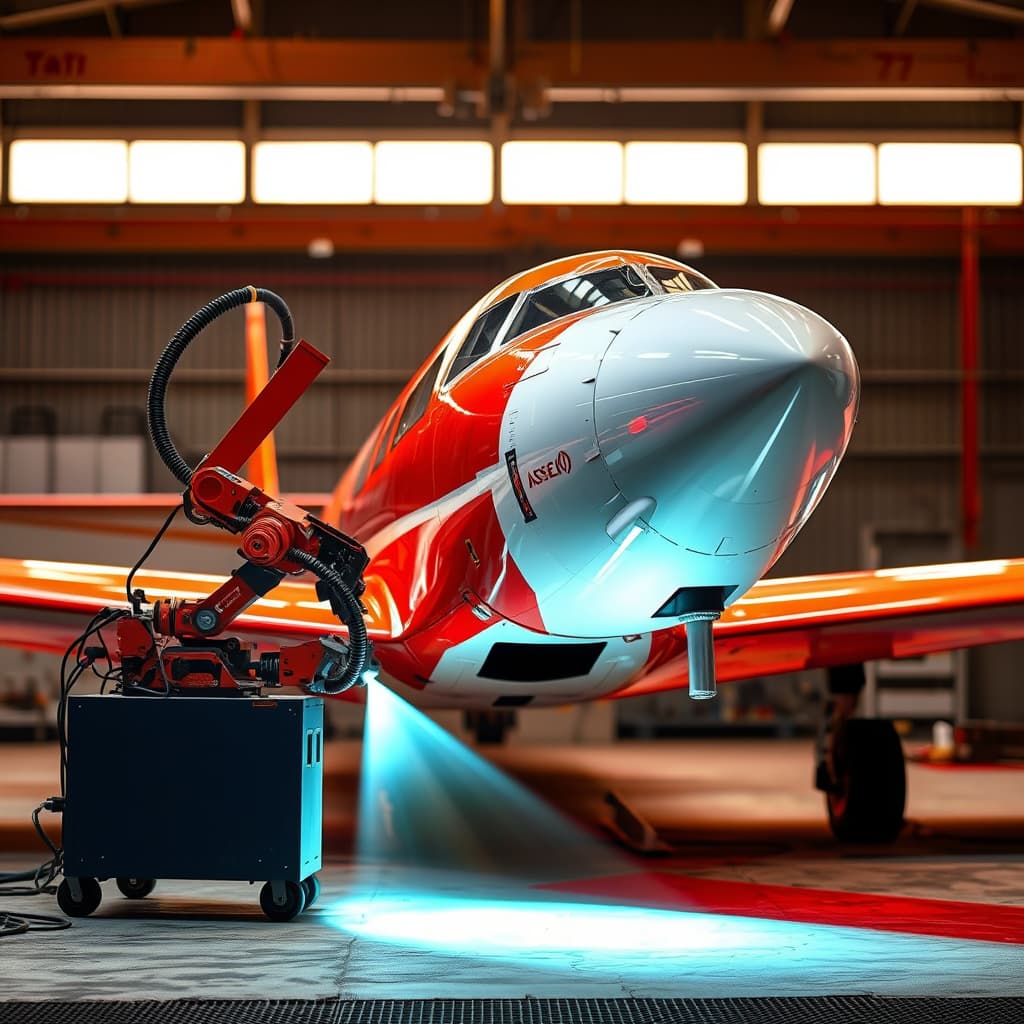
Robotic Inspection and Maintenance
This project focuses on the inspection and maintenance of aircraft using robotic systems, including robots inspecting aircraft in hangars.
Explore Technology →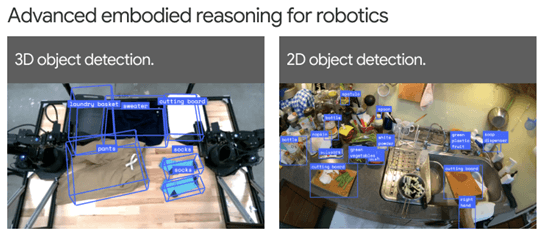
Robotics Vision and Detection
This project focuses on the use of vision and detection technologies in robotics, including 3D and 2D object detection, autonomous robots with vision, and multimodal prompts for robotics tasks.
Explore Technology →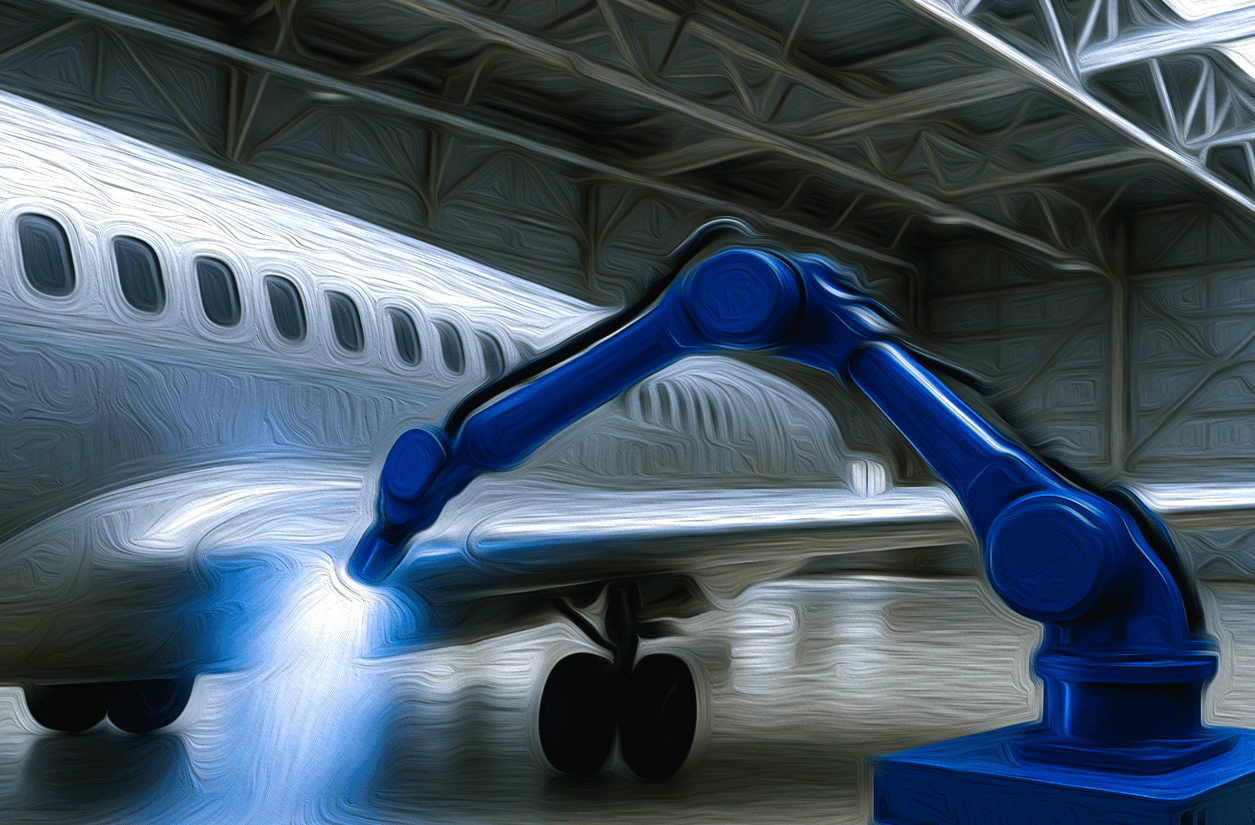
Robotic Arm Applications
This project highlights the diverse applications of robotic arms, including working on airplanes in hangars, mobile platforms, and human-operated interfaces.
Explore Technology →